Boating Through the Knysna Heads: What You Need to Know
The Knysna Heads are one of SA's most dramatic and potentially dangerous passages. Here's a complete guide for boaters planning to transit the Heads.
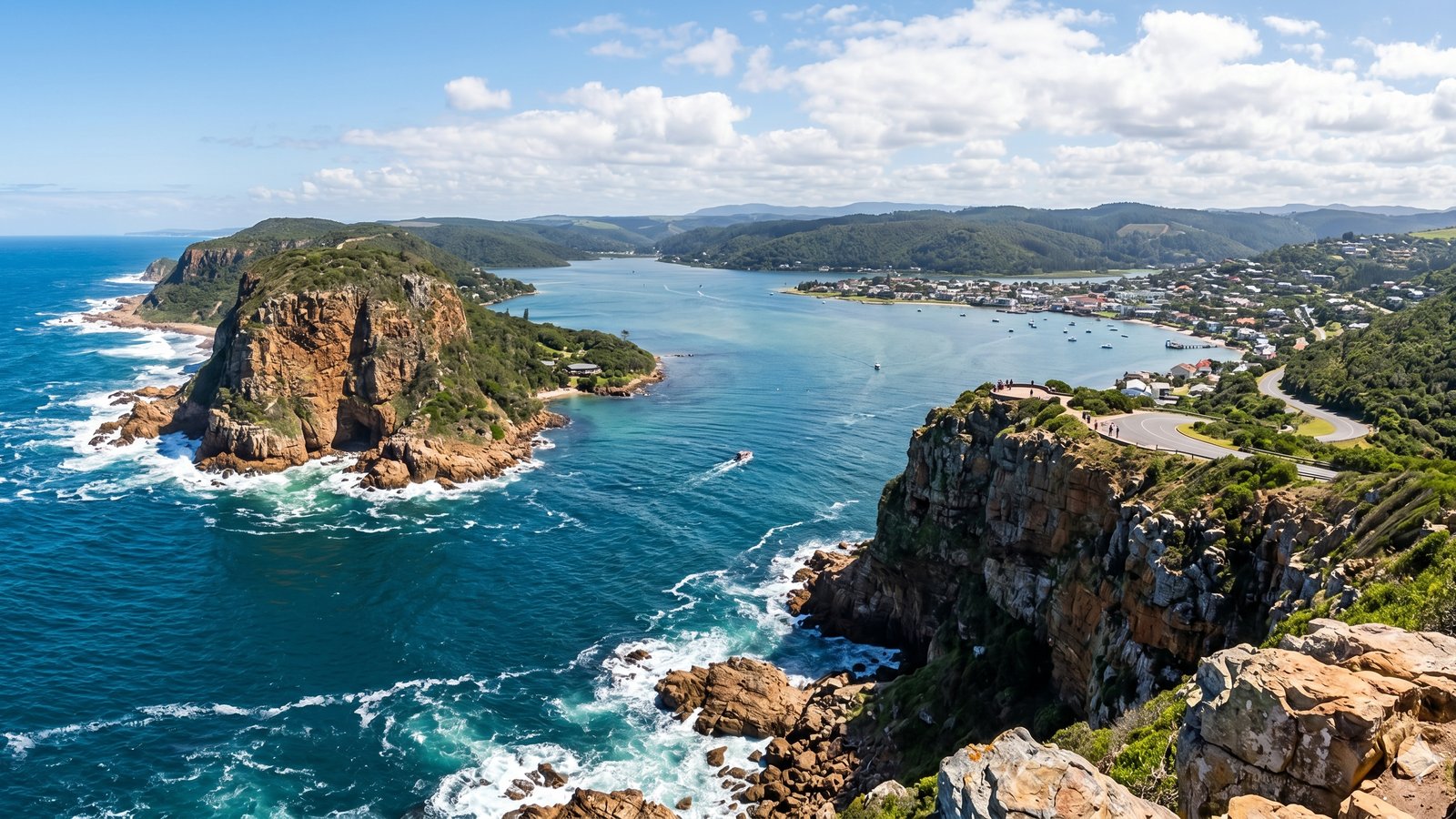
The Knysna Heads — those two dramatic sandstone cliffs guarding the entrance to the Knysna Lagoon on the Garden Route — are one of South Africa's most photographed and most discussed boating passages. Beautiful and sheltered from the inside, the Heads can become genuinely dangerous in adverse conditions. The passage has a long history of incidents, making it one of the most important topics for any boater planning to cruise the Garden Route coastline.
Understanding the Knysna Heads
The Heads consist of two rocky headlands — the Eastern Head (managed by South African National Parks) and the Western Head (privately owned) — between which the Knysna Lagoon drains into the Indian Ocean through a narrow, shallow channel. The navigable width of the channel is limited, the depth varies with tidal movement and sediment deposition, and the sea state at the entrance can change rapidly.
What makes the Heads challenging for incoming and outgoing vessels is the combination of:
Swell refraction: Ocean swell wraps around both headlands and meets in the channel, creating confused, steep, and occasionally breaking sea states that are not always predicted by offshore wave buoys.
Tidal streams: Strong tidal currents run through the narrow channel at peak flow, reaching 4-6 knots — powerful enough to significantly affect vessel manoeuvring speed and angle relative to the sea state.
The bar: A shallow bar at the entrance to the channel becomes breaking surf in any significant swell. Breaking waves in the channel entry present a serious hazard to all but the largest vessels.
Limited width: The navigable channel is narrow, leaving minimal room to manoeuvre if conditions deteriorate or vessel control is compromised.
When Is It Safe to Transit?
The golden rule at the Knysna Heads is: if in doubt, don't go out. Local experienced skippers and the harbour master are the best sources of real-time passage advice. General guidelines for safe passage include:
- Southwest swell height is below 1.5 metres (ideally below 1 metre)
- No significant cross-swell from the south-east
- Transiting within two hours of high water (slack water minimises tidal stream strength)
- Good visibility — clear weather, no sea haze
- No threatening weather systems on the weather charts
Contact Knysna Port Control on VHF Channel 16 before any passage attempt. The harbour master monitors conditions continuously and will provide authoritative advice on whether conditions are suitable. This is not a bureaucratic formality — it is potentially life-saving guidance.
Historical Incidents at the Heads
The Knysna Heads has claimed vessels and lives over its recorded maritime history. The most significant recent tragic incident was the loss of a vessel with fatalities during a transit in dangerous conditions. The NSRI (National Sea Rescue Institute) and the Knysna community take passage safety extremely seriously, and the advice of the harbour master and NSRI must be respected.
Do not be influenced by peer pressure, schedules, or the desire to avoid missing a weather window to attempt a passage that local expertise says is unsafe. A delayed departure or remaining in the lagoon is always preferable to a capsize or swamping on the bar.
NSRI Station Knysna
NSRI (National Sea Rescue Institute) Station 11 is based in Knysna and maintains 24/7 watch. The station has purpose-built rescue craft suited to operations in and around the Heads. In an emergency on the Knysna bar or in the adjacent coastal waters:
- Contact NSRI on VHF Channel 16 (continuously monitored)
- NSRI emergency number: 082 990 5966
Activate your EPIRB or PLB if the situation is life-threatening and you cannot make radio contact. EPIRB and PLB distress signals are monitored internationally and will initiate an immediate response.
Inside the Lagoon: Boating in Knysna Waters
The Knysna Lagoon itself is a delightful cruising environment — calm, sheltered, and spectacularly scenic. The lagoon extends inland for some distance and offers secure anchorage in several locations. The Knysna Waterfront Marina provides berths for visiting vessels. Note that the lagoon is a sensitive marine protected area and specific rules apply to anchoring, speed limits, and protection of marine habitat.
Speed limits in the lagoon vary by zone — respect all marked speed limit buoys and zones. Operating at speed near shorelines, swim zones, or paddle craft is both dangerous and illegal.
How Your Boat Insurance Applies at the Knysna Heads
Your boat insurance covers the Heads passage — provided you are operating within the terms of your policy. This means:
The skipper must hold the required SAMSA Certificate of Competence. The vessel must be carrying the required safety equipment for coastal operation. You must be operating within your declared navigation area — if your policy is inland-only, a coastal passage to Knysna is not covered. The passage must be attempted in conditions appropriate to the vessel's capability and design — gross negligence (attempting the passage in clearly unsuitable conditions against professional advice) could constitute a policy breach.
Operating in conditions clearly beyond the vessel's capability, or ignoring explicit warnings from the harbour master, could be deemed contributory negligence. Your insurer may argue that the loss was not a covered event but rather the result of a reckless decision by the skipper. Always prioritise safety over schedule — and document the harbour master's clearance before any passage.